
Jubilee Farm – Social Farming in Northern Ireland
Rural Support delivers the Social Farming Support Service for Northern Ireland, supporting farmers delivering Social Farming and promoting the service for those who could benefit from participation. There are currently 17 farms delivering a Social Farming service across Northern Ireland to approximately 90 individuals with a support need. The Social Farming Support Service operates with a vision of Social Farming being widely recognised and understood in Northern Ireland, with farmers delivering high-quality Social Farming services across the region for individuals in need of support, that are valued by all, accessible for all, and supported by sustainable resources.
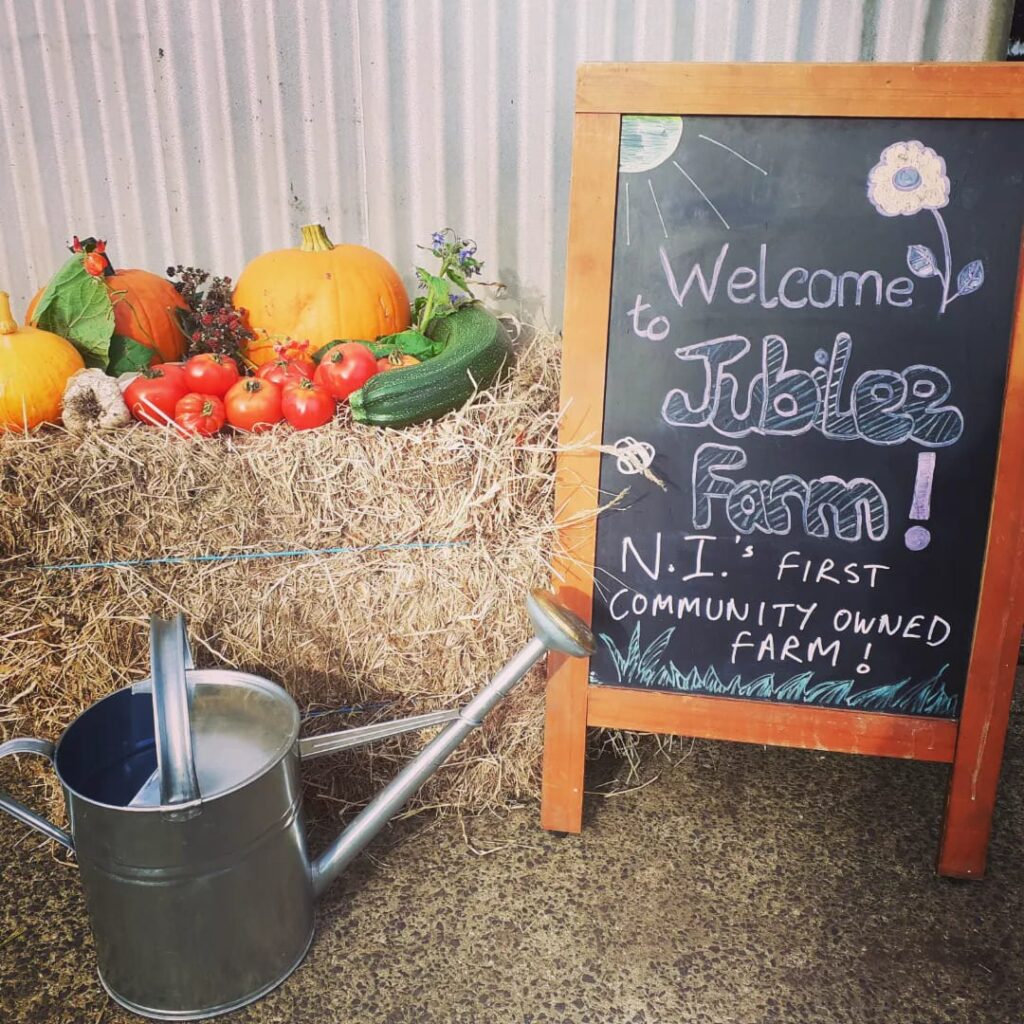
Jubilee Farm is a 13.5-acre space in Larne and has been delivering Social Farming with support from Rural Support since 2019. The farm is based on the ethos of Creation Care, where in stewardship it is farming and conservation in partnership. All aspects of Jubilee Farm are given the opportunity to flourish, including the people. It is Northern Ireland’s first community owned farm, developed under a share offer where 150 people bought into the idea and concept raising funds to buy the farm. From there it has developed into a community centred place where everyone is welcome, equally.
There are many aspects to Jubilee Farm from its conservation plan, regenerative farming principles, to how it operates day-to-day. It is chemical free, with a no-dig policy and all animals are organic fed with a commitment to high welfare. Farm operations rely on an agroecological approach and each person working, volunteering, or visiting the farm will get a chance to experience this. In action this produces a range of vegetables, pork, and eggs that can be purchased at the farm.
Farm Manager Tim Davies is the lead facilitator of Social Farming at Jubilee Farm. His skills base is diverse across horticulture, conservation, animal welfare, and social care work supporting a variety of individual needs from youth to additional physical and mental needs care. Registered volunteers assist with Social Farming days and contribute to the community energy of the farm as well as the wellbeing of all involved in Social Farming sessions.
Each Wednesday and Thursday Tim welcomes two groups of three adults with Learning Disabilities through a contract agreement between Rural Support and the Northern HSC Health Trust. Each person enjoys the much-needed green space of Jubilee Farm, caring for animals, planting seeds, horticulture care, and creating an environment welcoming to biodiversity. Dedicated in all-weathers the six individuals attend weekly – it is their farm on those days, and they take on projects to develop and build on skills, confidence, and wellbeing.
Tim commented on the importance of Social Farming, “Connecting with all aspects of Jubilee Farm, agriculture, nature and community involvement promotes better wellbeing, develops communication, confidence, contentment and life skills. Social Farming contributes to the life of the farm as well as moving and progressing at a pace suitable for each individual. Having them here is a great opportunity to experience different things that are beneficial to their physical, mental, and social wellbeing. The social aspect works both ways, it is of benefit to them but also to our regular volunteers and our staff. Getting involved in various tasks helps to ensure they remain active, learn new skills and feel a sense of ownership at the farm”.
Social Farming is a service delivered by farmers as an innovative use of agriculture to promote therapy, rehabilitation, social inclusion, education, and social services in rural areas. There are multiple benefits from Social Farming for both the individuals involved and the rural economy.
The service Jubilee Farm provides is allowing participants to benefit from being in a natural, outside environment, grow in confidence as they learn new skills, have the opportunity to care for animals and plants, develop new relationships with people, have a role on the farm and a feeling of doing something worthwhile while allowing them to be integrated into the local community.
If you would like to hear more about Social Farming or are interested in being involved, please contact Rural Support’s Social Farming Support Service on 028 86760040 or socialfarming@ruralsupport.org.uk.
To find out more about the range of services and programmes available at Rural Support, go to the NI Farm Support hub at www.ruralsupport.org.uk or telephone the Support Line on Freephone 0800 138 1678 available Mon-Fri 9am-9pm.

